I’ve been gathering hollyhock (althaea rosea) seeds from the land I live on. In addition to being beautiful, I've since learned that hollyhocks are medicinal (the whole plant is eatable too!).
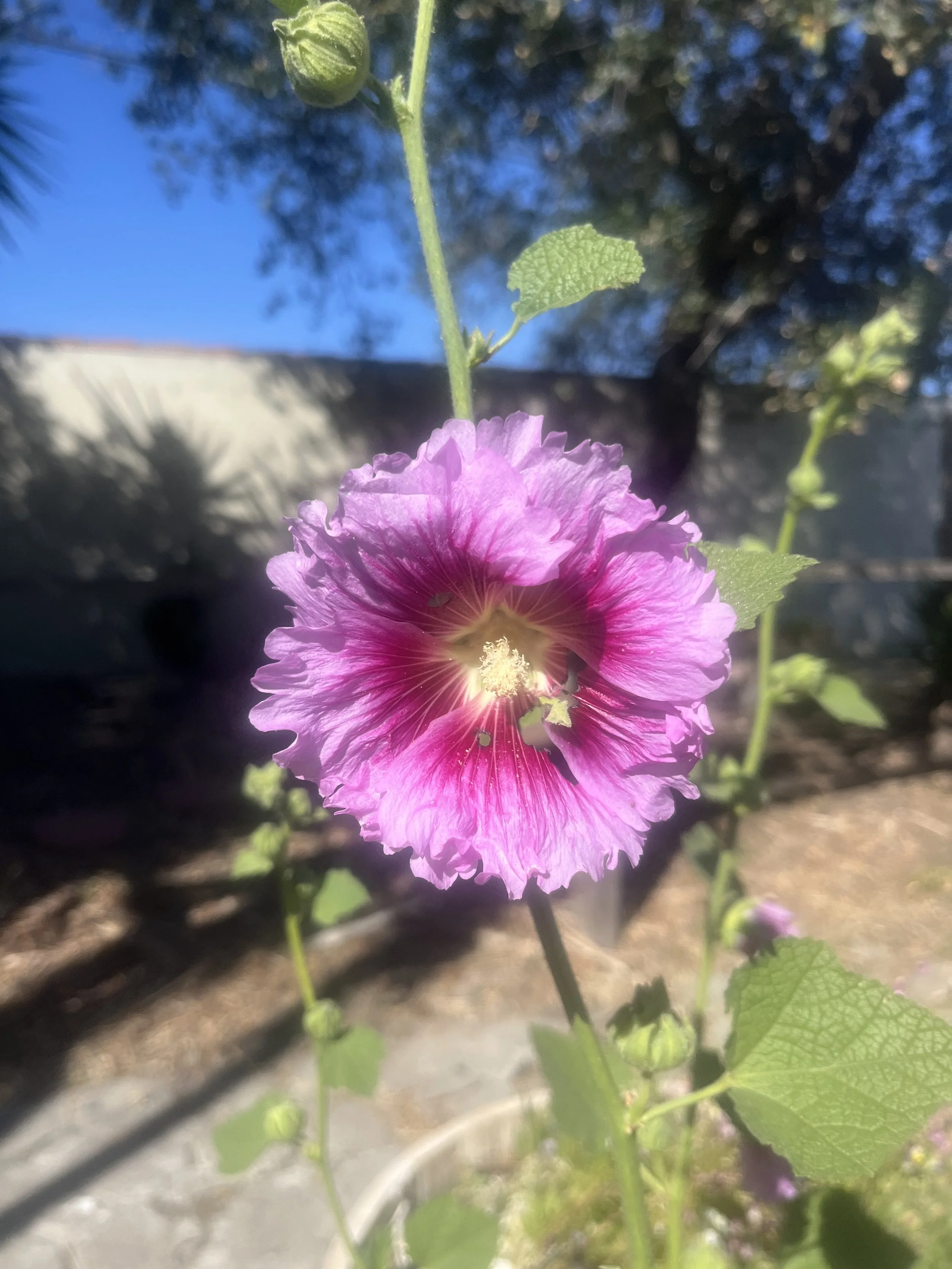
A purple hollyhock (althaea rosea) at the Living Museum of Herbal Wisdom
A few months ago, I had a dream about hollyhock being medicine and then I did some research. I learned that hollyhock is related to and has many of the same medicinal properties as marshmallow (althaea officinalis), a well-known ally in Western herbalism prized for the demulcent and emollient properties of their mucilage, a gel-like polysaccharide that swells in water and coats surfaces, soothing, softening, and reducing tissue irritation (in addition to being anti-inflammatory, antioxidant, and antimicrobial). Other plants in the mallow family include okra and hibiscus. I also learned hollyhock originally comes from southwest/central Asia and came to Europe and other places along trade routes, and that in traditional in Persian/Unani healing traditions, hollyhock, known as khatmi, is described as Kaseer-al-manafe, “of many benefits.”
Re the science, here's what my research said–
Modern pharmacology from these same regions [meaning, southwest/central Asia] has tried to test the old claims, mostly in lab and animal studies:
Reviews compiling this work report antitussive, anti-inflammatory, antiestrogenic, antimicrobial, immunomodulatory, antioxidant, antiurolithiatic (anti–kidney-stone), and cytotoxic activities, ResearchGate tied to constituents like flavonoids, polysaccharides/mucilages, phytosterols, tannins, and hydroxybenzoic acids. ResearchGate
A Kashmir Himalayan study found that Alcea rosea seeds lowered blood sugar and improved antioxidant status in diabetic rats nih — notable because it was framed as the first antidiabetic study on the species, building on its already-documented anticancer, antiurolithiatic, diuretic, anti-inflammatory, antibacterial, hepatoprotective, and analgesic activities. nih
Iranian researchers have run antibacterial screens (comparing hollyhock with hibiscus and Malva neglecta) and even RAPD genetic-diversity surveys of wild Iranian Alcea rosea populations, and Chinese phytochemists have isolated new compounds from the plant.
I was/am especially interested in the antiurolithiatic (anti–kidney-stone) and also antiestrogenic properties. I had recently been talking to a Chilean doctor and fellow herbalist and we'd been wondering about/hadn't heard about any antiestrogenic plants; these are valuable for any conditions where there is too much estrogen production, including breast cancer, fibroids, mastitis.
Avicenna, the 11th century medical philosopher echoes Galen and Hippocrates in saying that food is the best medicine, and it turns out there is a Turkish dish where hollyhock flowers are served filled with a rice & bulger blend, which is def something I want to try making:
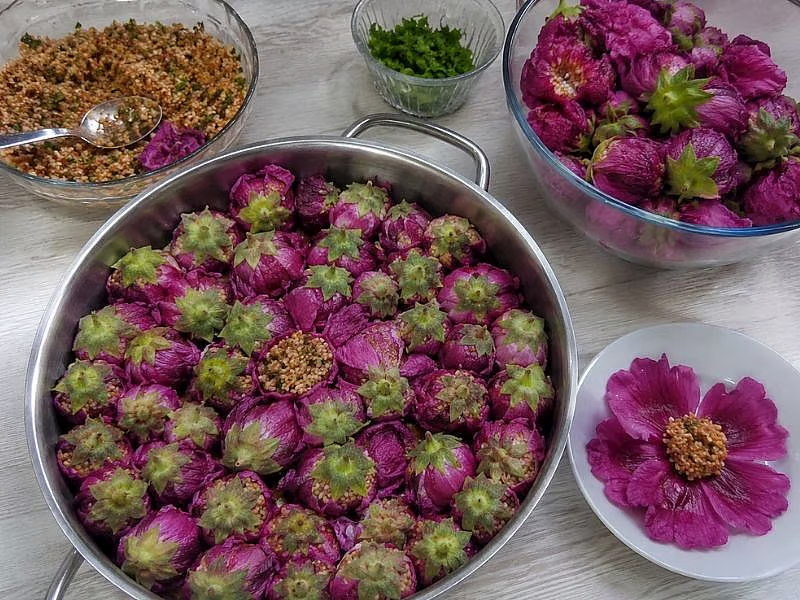
Hatmi çiçeği dolması (stuffed hollyhock flowers), an Aegean/Anatolian zeytinyağlı (olive-oil) dish that’s been enjoying a gastronomic revival
In the meantime, I am enjoying eating the petals–they are sweet, hydrating, and fun to eat!