So powerful and so revered is vervain (verbena officinalis) that this plant is known as "Tears of Isis," after Isis, the Egyptian goddess of innumerable names. According to twentieth century Egyptologist, E. A. Wallis Budge, it is said that when Isis's sweat fell to the ground, plants sprung. Isis and her plants grew in recognition across Africa, Rome, the rest of Europe, and beyond.
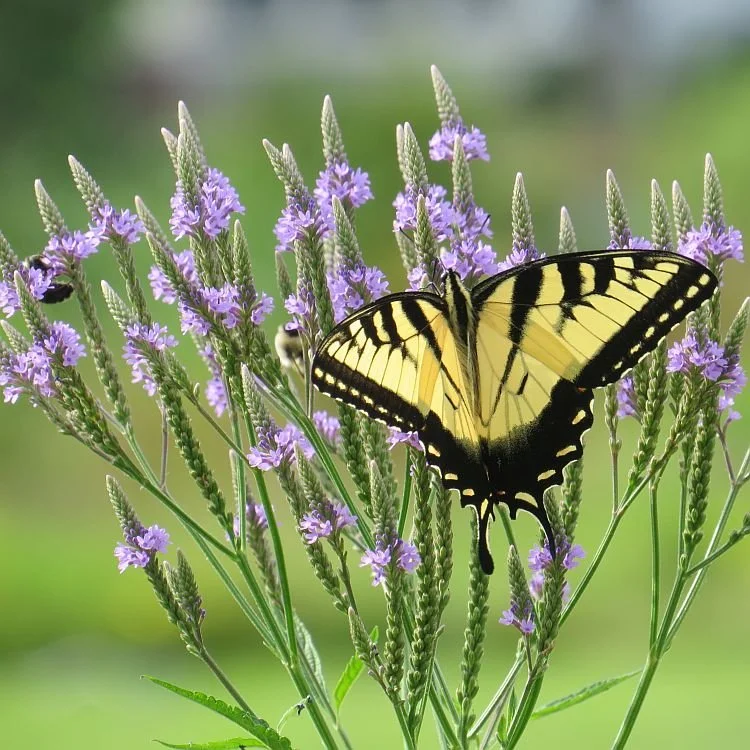
In California, a related vervain known as blue vervain (verbena hastata) is a well-known ally for many of the same reasons we love verbena officinalis–these allies help calm, cool, digest, sleep, still, and so much more. Here is more on the mysteries of Isis and the lore of vervain according to cultural anthropologists, historians, ethnobotanists, and authors of Witchcraft Medicine Claudia Muller-Ebeling, Christian Ratsch, and Wolf-Dieter Storl:
“The original Egyptian goddess Isis is called ‘the one with magical power,’ ‘the magical being,’ and the ‘great sorceress’ …The cult of Isis was not only a mystery cult, but also a mystical healing cult. In the center stood Isis, the divine sorceress, the protective mother and goddess of the medicinal plants and poisons…One of the most important plants was vervain (verbena officinalis). This plant was also called druid’s herb, Juno’s tears, or holy herbe [hiero botane]….Pliny [the Elder], who usually did not make positive references to magic and ritual, described the magical and healing qualities of vervain, the divine plant of Isis: ‘No plant however is so renowned among the Romans as hiera botane [sacred plant]. With this the table of Jupiter is swept, and homes are cleansed and purified." (emphasis mine)
Close to two millennia ago, in 2 CE, Greek traveler and geographer Pausanias heard a Phoenician informant say the Egyptians hold a feast for Isis when she is mourning her husband Osiris. During this time, her tears makes the river Nile rise, flooding the land, making fertile fields. Among the many celebrations this time of year offers is the Isia, an ancient Roman festival based this very Egyptian tradition. It traditionally runs from October 28th through November 1st.
This past Saturday, we drank cacao, explored vervain’s medicine, and everyone went home with a bottle of "Tears of Isis," a cooling, calming, and quite bitter remedy mellowed through a glycerite extraction, and a "papyrus" scroll with voices and experts speaking of vervain's many gifts.
The season of gifts (and some floods, here in California, but not only California) has officially begun.
But don't worry, the musuem has weeping cloths (ask us about this technology)!